
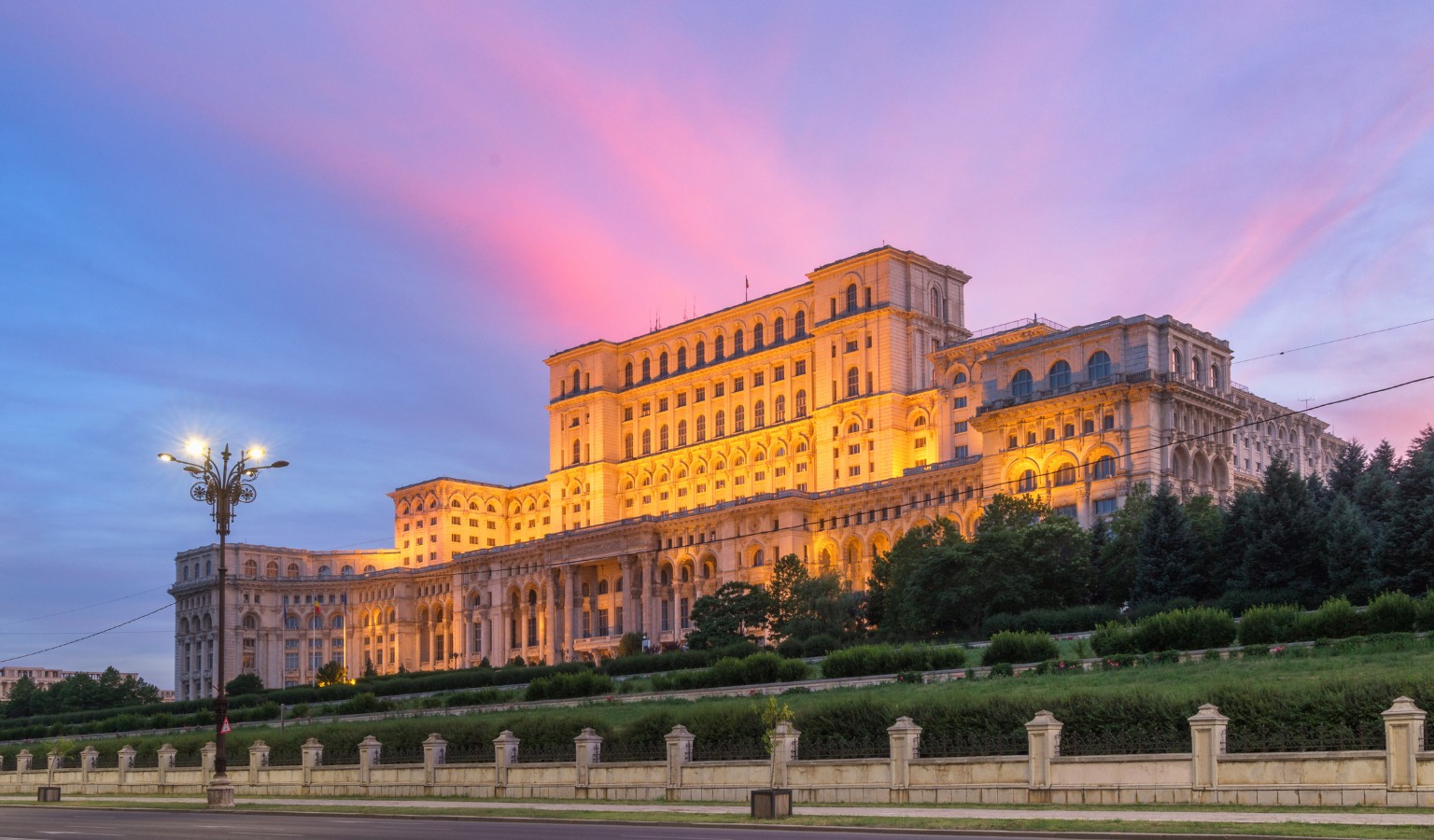
The People’s House: A Story of Earthquakes, Empires, and One Very Long Wait for the Lift
Note: The characters in this blog post are fictitious, but the places spoken about are real and can form part of our accessible tours.
Hi again — Diana here, back again for the second installment of my monthly updates. This month I want to do something a little different. Instead of just telling you about our previous Sunday’s adventures, I want to tell you about the building itself first — because once you know the story behind the Palace of the Parliament, walking through it hits you a little differently. Afterwards I’ll get into the practical stuff: what’s actually accessible there.
The story
It starts, strangely enough, with an earthquake. In March 1977, a huge quake tore through Bucharest, killing over a thousand people and leaving whole neighbourhoods in ruins. For Nicolae Ceaușescu, Romania’s communist leader at the time, the disaster became an excuse. He’d visited North Korea a few years earlier and come home dazzled by Pyongyang’s monumental scale, and now he had his opening to build something to match it, right in the heart of his own capital.
The area he chose was Uranus, an old hillside district of Bucharest full of houses, churches, and a hospital. All of it came down. Historians estimate around 40,000 people were displaced to clear the ground for what Ceaușescu called the House of the Republic — later, and more famously, the Palace of the Parliament, or simply Casa Poporului, the People’s House.
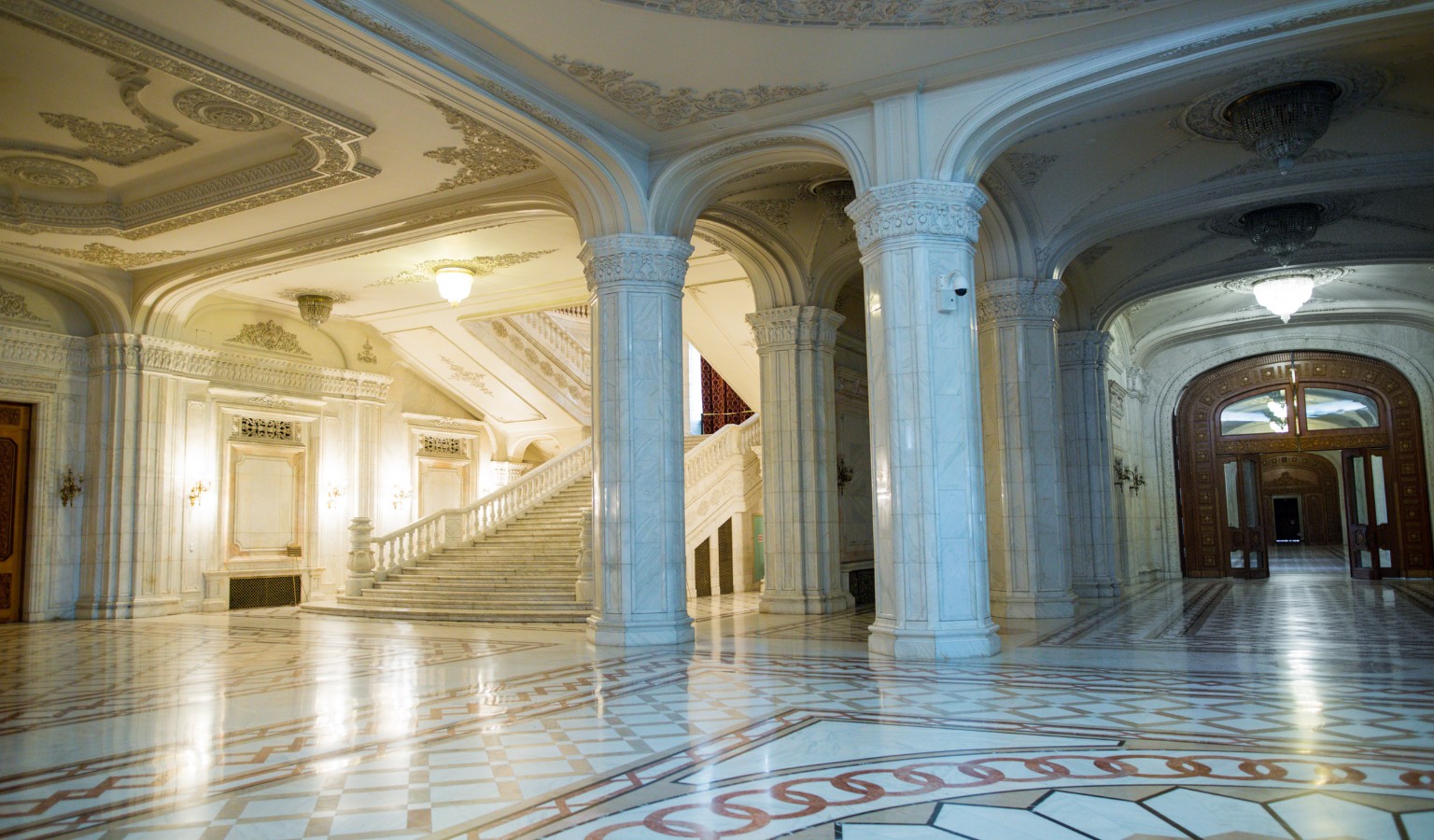
Construction ran from 1984 to 1997, though Ceaușescu never got to see it finished. Some 20,000 workers and 700 architects worked around the clock, using only Romanian materials — marble, wood, wool, crystal — right down to the last chandelier. It’s still, by most measures, the heaviest building on Earth, and the second-largest administrative building after the Pentagon. Underneath it all sits an eight-level basement, the lowest one built as a nuclear bunker, linked by roughly 20 kilometres of tunnels to other state buildings across the city — a monument, in its way, to just how afraid one man was of the world above ground.
Ceaușescu was overthrown and executed in December 1989, months before the building he’d poured the country’s resources into was anywhere near complete. To this day an estimated 70% of it sits empty. And in one of history’s odder footnotes, the first person to ever address a crowd from its grand balcony wasn’t Ceaușescu at all — it was Michael Jackson, in 1992, who opened with “Hello, Budapest!” to a very confused, very Bucharest crowd.
Standing in the halls now, knowing all that, it’s hard not to feel two things at once: real awe at the craftsmanship, and a kind of heaviness about what it cost to build. I think that tension is exactly why it’s worth visiting.
What’s actually accessible
Here’s where I did my homework, because — as I mentioned last time — the internet gives you a different answer every time you ask.
The official line: the Chamber of Deputies, who run the Palace, offer free admission to visitors with disabilities plus one companion. Booking for small groups (1–9 people) is by phone at least 24 hours ahead — +40 733 558 102 or 103. Larger groups need to email at least three days out. This is the detail that matters most: nothing about accessibility here is walk-up. You call, you tell them what you need, and they build the visit around that.
What you’ll find once you’re in: the main visitor entrance is step-free, and there are elevators serving parts of the building. It’s true that the standard walk-in tour route includes some stairs, since the building wasn’t originally designed with accessibility in mind. But that’s exactly why the phone call matters — when you flag your needs ahead of time, the Palace can put together a route that uses the ramps and elevators instead. It takes a bit of planning, not luck.
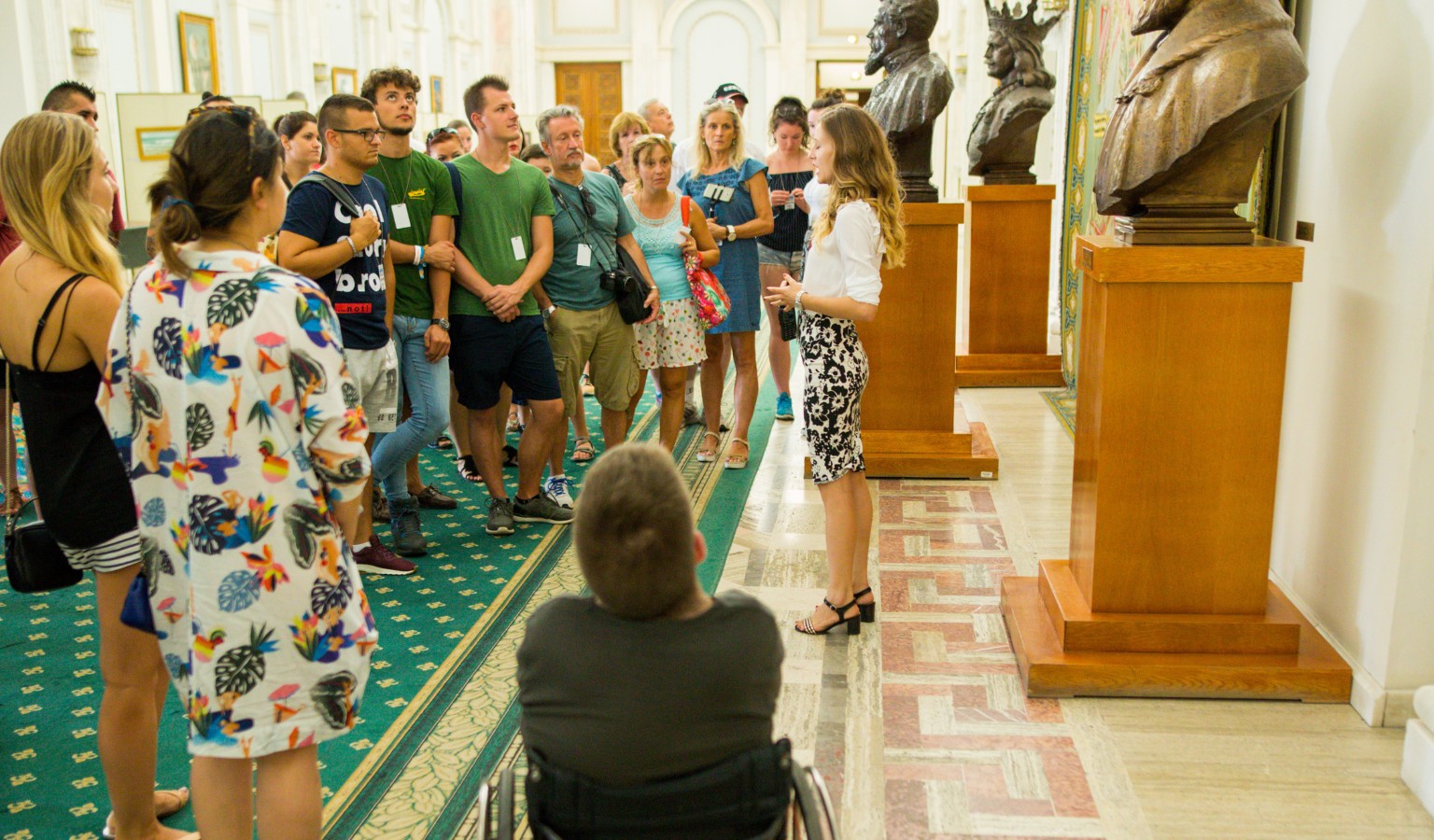
A few other practical notes worth knowing:
- Floors throughout are polished marble or wood — smooth going for wheels and canes alike, no cobblestones to fight with.
- Security screening is mandatory for everyone and can take 15–25 minutes, with some standing around — worth pacing yourself for if standing for long stretches is tiring.
- The building is climate-controlled throughout, so at least the weather’s never a factor.
- Wheelchair rental can be arranged in advance directly through the Palace if needed.
I’m not sure it’s a place you can just show up to and wing it — but it is genuinely doable, especially with an accessible tour operator like Accessible Romania.
Why it’s worth the phone call
There’s something fitting about a building built on that much fear and control now requiring you to simply ask for what you need, and having someone actually arrange it. It’s not effortless. But it’s real, and it’s there if you go looking for it — which, if you’ve been reading these posts for a while, you’ll know is basically the theme of accessible travel in Romania generally.
The Palace of the Parliament is one of the stops on Accessible Romania’s Bucharest day tour, alongside the Village Museum and the old town — and having sorted through all of this myself, I can see why they include it. Someone’s already made the calls, asked the questions, and built the route, so you don’t have to piece it together from a dozen contradictory listings the way I did.
That’s it from me this month. See you next time.
— Diana
Sources consulted for this post include the official Chamber of Deputies visitor information (cic.cdep.ro), WheelchairTravel.org, Rolandia, and several independent Bucharest tour guides — accessibility details can change, so always confirm directly with the Palace before visiting.